SUMMARY Executive
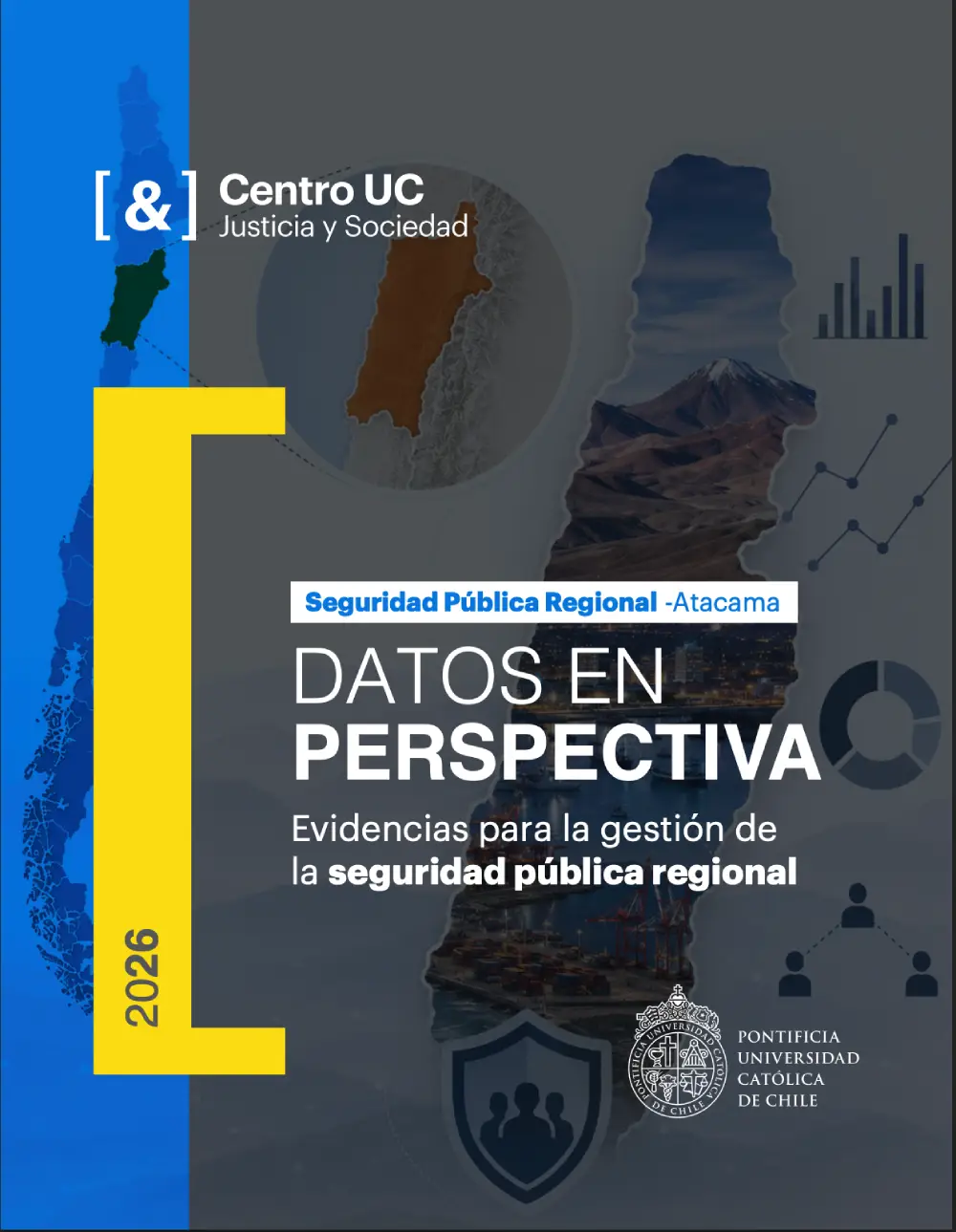
Data in Perspective – Regional Public Safety Series – is part of a series of regional bulletins aimed at contributing to the public debate on security from a territorial perspective. The objective is to analyze strategic priorities and main security challenges based on a regional-level diagnosis. In this way, it seeks to provide relevant information for the security debate and for decision-making in the field of public policy with a regional perspective.
The Atacama Region is facing a profound transformation of its crime landscape. Beyond the increase in the number of crimes, available data reveal a qualitative shift: the proliferation of firearms and the emergence of highly complex phenomena that exceed the region's historical patterns. Between 2022 and 2025, Atacama's homicide rate (6.9) consistently remained above the national average (5.4). One-third of homicides were committed with firearms and nearly one in three was linked to organized crime, according to the Center for the Prevention of Homicides and Violent Crimes.
Over the same period, kidnappings surged by 16% between 2023 (9 kidnappings per year) and 2024 (32 kidnappings per year)—the largest proportional increase in the country—and more than half of these crimes originated from disputes linked to organized crime. Data from Carabineros de Chile and the Investigations Police show a gap between the increase in micro-trafficking cases (which nearly doubled in the last decade) and a slight decrease in drug trafficking cases in the region, which could suggest a loss of police capacity to investigate large-scale drug movements in Atacama. Likewise, firearms offenses have shown a concerning upward trend since 2022, suggesting greater availability of weapons in the region.
Adding to these phenomena is a particularly alarming and significant finding: between 2022 and 2024, cases of child sexual commercial exploitation surged by 22% in the region, marking the sharpest increase of the analyzed period. Although data from 2025 show a reduction, the magnitude of the phenomenon and its acceleration in such a short time make it an unavoidable priority.
Author: David Jara, Coordinator of Security Studies, UC Center for Justice and Society, UC Sociologist, Master in Public Policy, University of Chile
Cite: Jara, D. (2026). Data in Perspective. Regional Public Security– Atacama. Evidences for regional public safety management. UC Center for Justice and Society Studies.
ACCESS THE DOCUMENT HERE